Product Design Agency London | B2B Digital Products
What Does a Product Design Agency Do, and Why Do London B2B Teams Need One?
A product design agency designs digital products end-to-end: from initial user research and concept validation through information architecture, interaction design, UI design, and prototype testing, to the handoff specifications your engineering team needs to build accurately. Unlike a branding agency (which focuses on visual identity) or a web design agency (which focuses on marketing sites), a product design agency works inside the product itself — the dashboards, workflows, onboarding flows, and feature interfaces that your users interact with every day. For the UI-specific layer of this work, see our interface design agency London guide.
For London B2B teams, the value of a specialist product design agency London is concentrated in one fact: B2B product design is harder than consumer product design. Enterprise users have complex, multi-step workflows that evolve with their job function. Procurement teams scrutinise onboarding completion rates. Product directors are accountable to retention and expansion revenue, not just new user acquisition. A product design agency that understands these dynamics delivers designs that perform in production, not just in prototype demos.
The Product Design Process: What to Expect at Each Stage
A professional product design engagement follows a structured process. Understanding the stages helps B2B product and engineering teams prepare their input, align stakeholders, and plan sprint capacity around design deliverables.
1. Discovery and Research. The engagement begins with user research — interviews with representative users, analytics review, and a competitive analysis of similar products in your category. The output is a clear problem statement: which user needs are unmet, which interactions are failing, and which design decisions will have the greatest commercial impact. Skipping discovery is the single most common cause of product design that looks good but does not perform. Our UX research service runs this stage using moderated usability testing and structured interviews designed for B2B professional users.
2. Information Architecture and User Flow Design. Before a single screen is designed, the structure of the product is mapped: how users navigate from task to task, how features relate to each other, and how the product's mental model aligns with how users think. This work is almost invisible to end users when done well, and catastrophic when done poorly — it is the difference between a product that feels intuitive and one that requires three support calls to onboard.
3. Wireframing and Interaction Design. Low-fidelity wireframes establish layout, hierarchy, and interaction logic before visual design decisions introduce aesthetic variables. Wireframes are faster to revise than high-fidelity designs and easier to use in stakeholder alignment sessions where the conversation should be about structure and function, not colour and typography. Our prototyping and wireframing service covers this stage with clickable prototypes that allow user testing before engineering begins.
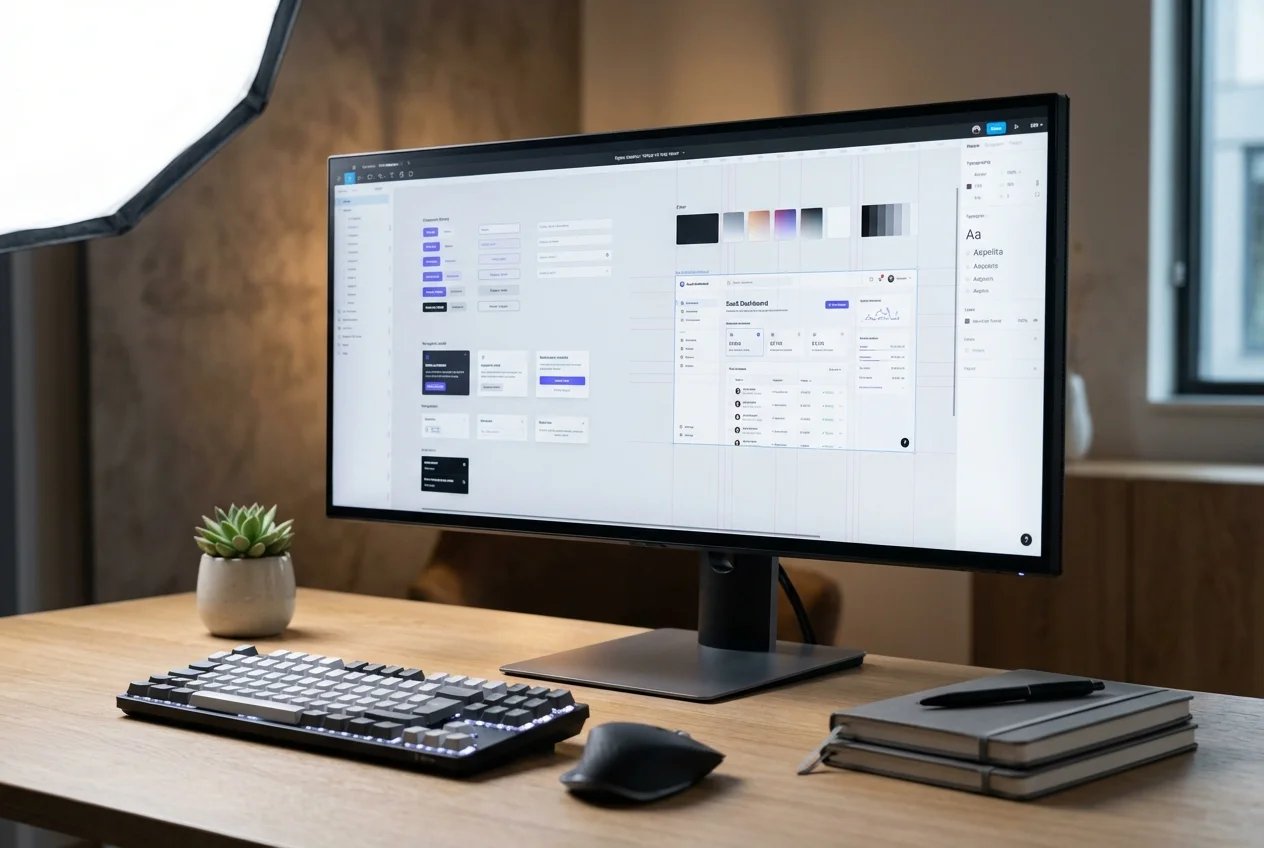
4. UI Design and Design System Production. High-fidelity UI design translates structure into a polished, production-ready interface: typography, colour, spacing, component design, micro-interactions, and a documented design system that engineers can build from reliably. A design system is not a nice-to-have — it is the foundation that prevents visual inconsistency, reduces engineering time on future features, and makes the product maintainable as it grows. Read how we approach this in our Figma design system to production guide.
5. Testing and Iteration. The design is tested with representative users before engineering begins at scale. Testing a high-fidelity prototype takes two to four weeks and typically surfaces three to five critical interaction failures that would have cost significantly more to fix post-engineering. The ROI calculation is simple: one redesign sprint pre-launch costs less than three engineering iterations post-launch. For more on this, our UX design process guide covers the full lifecycle in detail.
Product Design Agency London: What Makes London Different
London has more specialist product design agencies than any other city in the UK. For B2B product teams, this creates a genuine advantage: you can work in-person with a senior design team that has shipped across fintech, enterprise SaaS, professional services, healthcare technology, and regulated industries — sectors that dominate London's commercial landscape and that demand design rigour that generalist studios cannot match.
London-based product design agencies also have proximity to the venture and growth equity community that shapes product development priorities for Series A to Series D companies. The design norms for enterprise procurement, regulatory compliance expectations, and the performance benchmarks against which product design is measured are all calibrated by London's market. Working with a product design agency London that operates in this environment means your design team understands the commercial context as well as the craft. For a comprehensive overview of how to evaluate London agencies, our complete guide to London UX agencies covers these evaluation criteria in detail.
Product Design vs UX Design: What's the Difference?
The terms "product design" and "UX design" are often used interchangeably, but there is a distinction worth understanding. UX design focuses on the user experience — research, information architecture, interaction design, and usability. Product design encompasses UX design but also includes visual interface design (UI), design system architecture, and the strategic decisions about which features to design and in what sequence. A product designer is accountable to the full product experience — not just the usability layer.
For B2B SaaS teams, a product design agency is typically the better fit than a pure UX studio because the visual quality of the UI is as important as the structural quality of the UX for enterprise procurement and user preference. The overlap with UX is significant, and most specialist agencies use the terms interchangeably in practice. What matters more than the label is the agency's process: does it start with user research before moving to UI? Does it produce design systems alongside screen designs? Does it include prototype testing before engineering hand-off? For the detailed breakdown of how UX and UI interact in practice, read our UI vs UX design guide for businesses.
How to Choose the Right Product Design Agency in London
Three criteria matter most when selecting a product design partner for a B2B digital product. First: B2B sector experience. Consumer product design and B2B product design share techniques but not context — the user, the workflow, and the commercial stakes are structurally different. An agency that has shipped B2B products with complex onboarding, role-based permissions, and enterprise integration requirements will surface design problems that a consumer-focused agency will not recognise. Second: research-led methodology. A product design agency that begins with screens before running user research is designing to internal assumptions, not user reality. Third: delivery team seniority. The designer who presents in the pitch meeting should be the designer on the project — not a junior practitioner managed by the senior you met during the sales process.
To see how a strategic design approach translates to business outcomes, our strategic UX agency London guide covers the full selection methodology. Our UX agency vs in-house designer guide covers the staffing model questions in detail. Ready to discuss a product design engagement? Book a free 30-minute consultation and we will assess your product's current state, identify the highest-impact design improvements, and outline an engagement scope that fits your timeline and budget.
 UI Design