ServicesAboutBlogContact+44 7394 571279

UX Research

Deep enterprise research built on multi-method rigour and designed for stakeholder communication. We deliver the evidence that product directors and heads of digital need to justify investment, align cross-functional teams, and make design decisions with confidence.

Structured multi-method research programmesModerated in-lab and remote usability studiesContextual enquiry and field observationQuantitative survey design and analysisAnalytics deep-dives with business impact quantificationExecutive insight reports for boardroom presentationCompetitor experience benchmarking with strategic scoringCard sorting and tree testing for IA validation
Chat on WhatsAppFree Consultation

Enterprise UX Research: Rigorous Evidence for High-Stakes Product Decisions

When a product decision affects thousands of users and millions in revenue, gut instinct is not an acceptable basis for action. Enterprise organisations need research that withstands scrutiny — evidence that can be presented to a board, used to justify a seven-figure investment, or deployed to resolve a cross-functional disagreement that has stalled progress for months. Our UX research practice is built specifically for this context: structured, multi-method, and designed to produce findings that leadership teams trust and act upon.

Our Multi-Method Research Framework

We do not rely on a single methodology. Enterprise products serve diverse user populations across varied contexts, and understanding them requires a layered approach that triangulates qualitative insight with quantitative validation.

  1. Research Architecture: We begin with a scoping phase that defines precise research objectives, identifies the decisions the study must inform, and selects methodologies calibrated to your product maturity, user complexity, and organisational timelines.
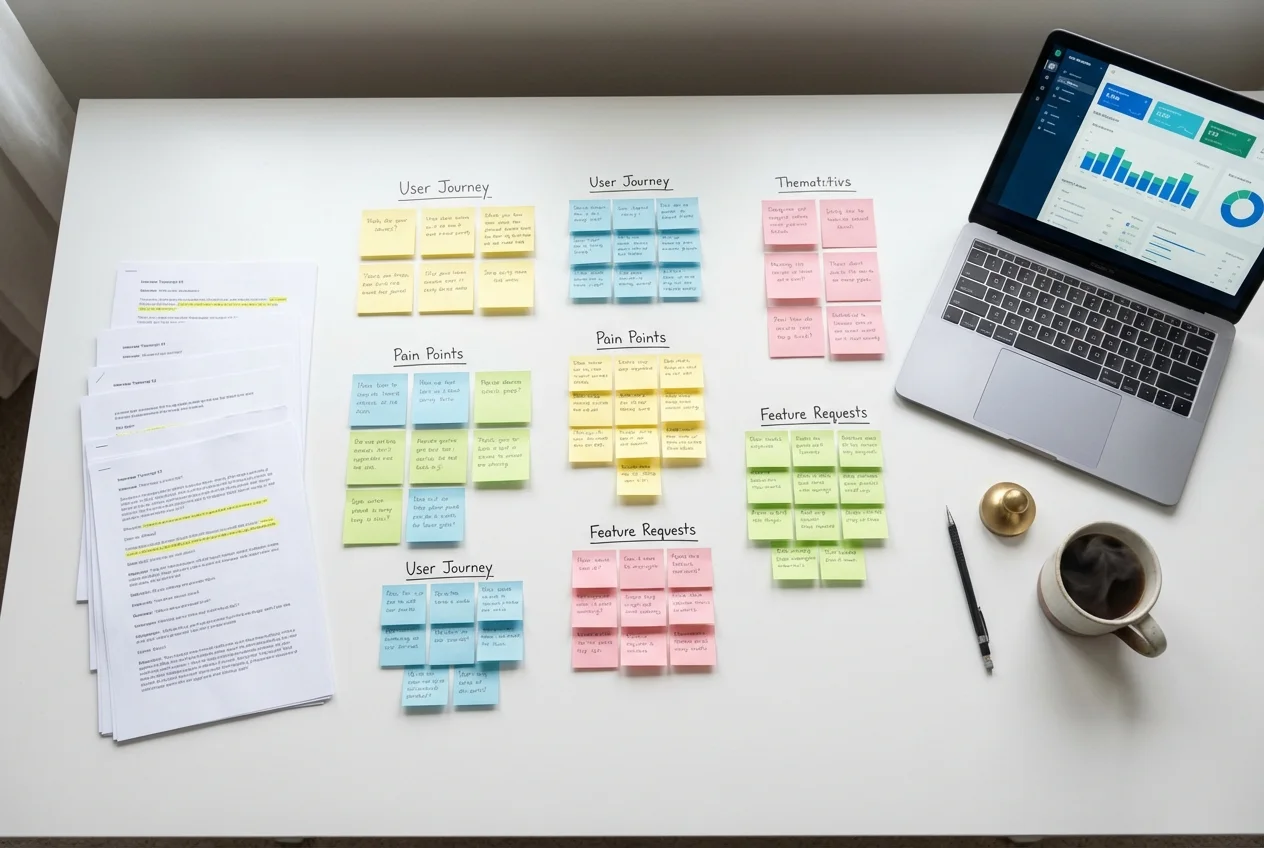
  2. Qualitative Depth: Moderated interviews, contextual enquiry sessions, and diary studies reveal the motivations, mental models, and emotional responses that quantitative data cannot capture. Sessions are recorded, transcribed, and coded for thematic analysis.
  3. Quantitative Breadth: Large-scale surveys, analytics deep-dives, heatmap analysis, and session recording review provide statistical confidence and quantify the business impact of qualitative patterns.
  4. Triangulation and Synthesis: Qualitative and quantitative findings are mapped against each other to validate patterns, eliminate bias, and produce a unified evidence base with clear design implications.
  5. Stakeholder Reporting: Findings are packaged into tiered deliverables — executive summaries for leadership, detailed reports for product teams, and annotated evidence libraries for design reference.

Deliverables Built for Enterprise Communication

Research that never leaves the design team is research wasted. Every output we produce is structured for organisational consumption.

  • Research protocol and participant recruitment documentation
  • Recorded sessions with timestamped highlight reels for stakeholder review
  • Thematic analysis report with coded findings and evidence traceability
  • Quantitative data report with statistical summaries and confidence intervals
  • Executive presentation deck with key findings, business implications, and recommended actions
  • Competitor benchmarking scorecard with strategic positioning analysis

When Enterprise Research Becomes Essential

Your organisation is preparing a platform investment exceeding six figures and needs user evidence to validate the direction before committing. Internal teams have conflicting views on user needs and there is no shared evidence base to resolve the disagreement. Customer satisfaction metrics are declining and support costs are rising, but nobody can explain why with sufficient specificity to act. You are entering a new market segment and need to understand unfamiliar user populations before designing for them. A regulatory or accessibility review has raised questions about user impact that require primary research to answer. In each scenario, structured research transforms organisational uncertainty into evidence-based clarity.

Why UX Agency London for Enterprise Research

Our senior researchers bring backgrounds in cognitive psychology, behavioural science, and product strategy. We have conducted studies across regulated sectors including financial services, healthcare, legal technology, and government — environments where research must meet a high evidential standard and findings must survive scrutiny from compliance, legal, and executive stakeholders. We produce insight reports that have been used in board presentations, investment committee briefings, and regulatory submissions. Every recommendation we make is traceable to specific user evidence, and we present that evidence in the language and format your leadership team expects.

If you are planning a research programme and need a partner with the rigour and credibility your organisation requires, book a free consultation to discuss your objectives.

Frequently Asked Questions

A focused study — covering research design, participant recruitment, eight to twelve moderated sessions, analytics review, and a comprehensive synthesis report — typically takes five to eight weeks from briefing to final delivery. Expedited timelines of three to four weeks are achievable for studies with a narrow scope and pre-recruited participants, though recruitment lead times for specialist user populations are often the binding constraint.

Related Articles

More Services

UX AuditUI DesignPrototyping & WireframingUX StrategyFrontend DevelopmentFigma to Code

Let's build something great together — get in touch

Ready to Get Started with UX Research?

Start Your SaaS Journey
UX Research | UX Agency London