
ServicesAboutBlogContact+44 7394 571279

Frontend Development

Enterprise-grade frontend implementation with accessibility compliance, performance optimisation, and maintainable architecture. We build production interfaces that preserve design intent, meet WCAG 2.1 AA requirements, and are engineered for long-term ownership by your internal engineering team.

React and Next.js with TypeScript architectureWCAG 2.1 AA compliance with manual screen reader testingCore Web Vitals optimisation and performance monitoringEnterprise CMS integration (Contentful, Sanity, Strapi, Drupal)CI/CD pipeline configuration for enterprise hosting environmentsComponent library matching Figma design system architectureTechnical documentation and team onboarding materialsOngoing maintenance and support retainers
Chat on WhatsAppFree Consultation

Enterprise Frontend Development: Compliance-Ready, Performance-Optimised, Built to Last

The gap between an approved design and a production interface is where enterprise digital projects most frequently lose value. Components are implemented inconsistently across teams, accessibility requirements are treated as a post-launch concern, performance degrades as features accumulate, and the codebase becomes increasingly difficult for internal teams to maintain. Our frontend development practice is engineered to prevent each of these failure modes — producing builds that preserve design intent, meet regulatory compliance requirements, perform under enterprise-scale traffic, and remain maintainable by your organisation for years after our engagement concludes.

Our Enterprise Build Methodology

Quality, compliance, and maintainability are architectural decisions made at project inception — not features retrofitted before launch.

  1. Architecture and Infrastructure: We establish a Next.js architecture with TypeScript that is appropriate for your scale, hosting environment, and internal engineering capabilities. CI/CD pipelines, environment configuration, and deployment workflows are configured for enterprise-grade hosting platforms including AWS Amplify, Vercel, Azure Static Web Apps, and self-hosted infrastructure.
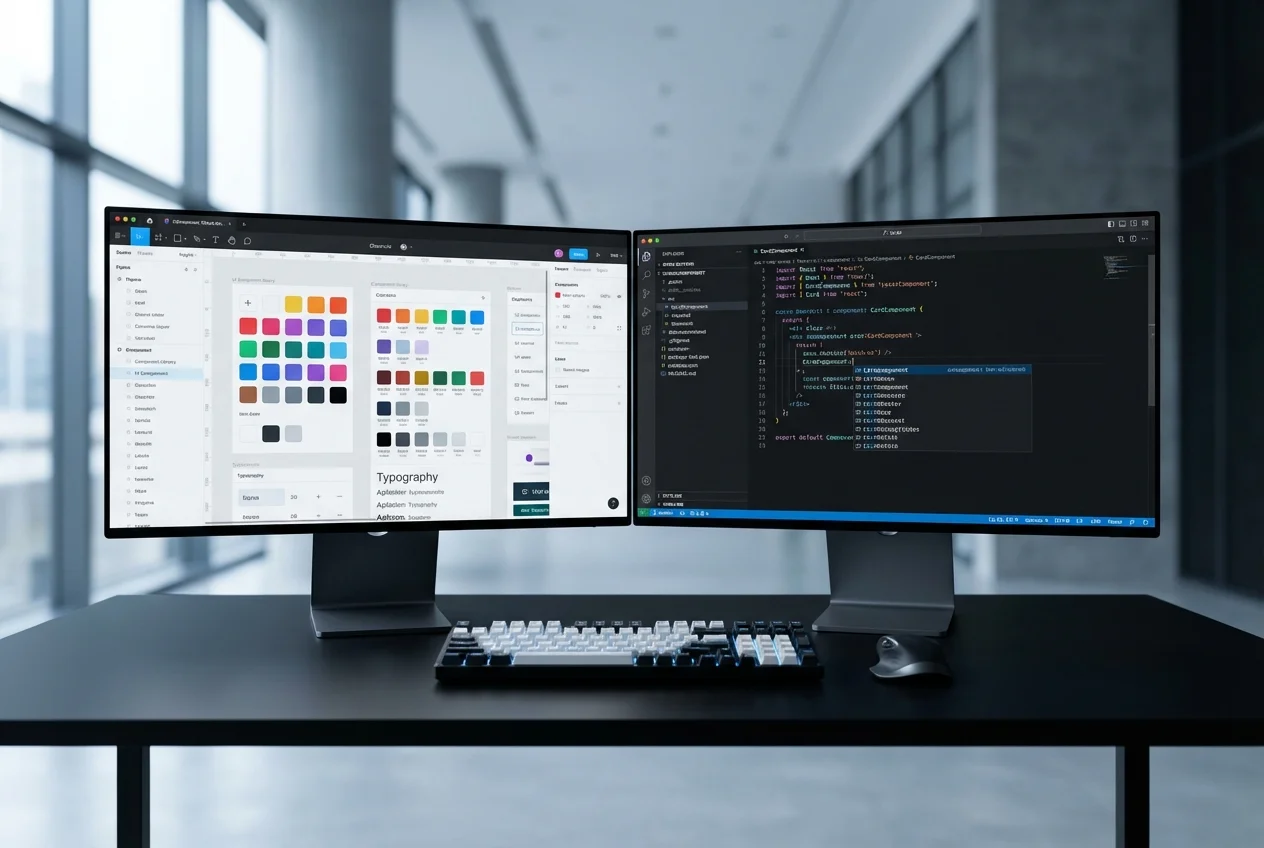
  2. Component Development with Design System Fidelity: Every Figma component is translated into a reusable, accessible React component with proper prop typing, state management, responsive behaviour, and all interaction states fully implemented. The component architecture mirrors the Figma design system structure, ensuring a maintainable 1:1 mapping between design and code.
  3. Accessibility as a First-Class Requirement: WCAG 2.1 AA compliance is validated continuously throughout development using automated tooling (axe-core, Lighthouse, Pa11y) combined with manual testing — keyboard navigation, screen reader verification (NVDA, VoiceOver, JAWS), and focus management auditing. This is not a pre-launch checklist; it is a development standard applied to every component.
  4. Performance Engineering: Core Web Vitals targets are established at project inception and monitored throughout the build. Image optimisation, code splitting, rendering strategy selection (SSR, SSG, ISR), caching architecture, and bundle analysis are all managed as continuous concerns, not end-of-project fixes.
  5. Enterprise Integration: CMS platforms (Contentful, Sanity, Strapi, Drupal), authentication systems, analytics tooling, and third-party APIs are integrated with clean abstraction layers that allow your team to modify or replace integrations without rebuilding core components.

What Your Organisation Receives

A production-ready codebase with the documentation and knowledge transfer your internal team needs to own it confidently.

  • React/Next.js codebase with TypeScript, fully version-controlled and deployed in your own infrastructure
  • Component library mirroring the Figma design system with prop documentation and usage examples
  • Core Web Vitals performance report with benchmarks achieved and optimisation details
  • WCAG 2.1 AA compliance report with testing methodology and evidence documentation
  • CMS integration with content modelling documentation and editorial workflow setup
  • Technical architecture documentation covering component structure, data flow, and integration patterns
  • Team onboarding materials including development environment setup, coding standards, and contribution guidelines

When Enterprise Frontend Development is Required

Your design team has produced high-quality Figma files but your internal engineering team lacks the bandwidth, React specialisation, or accessibility expertise to implement them to the required standard. Previous development engagements have produced interfaces that diverged from approved designs — eroding stakeholder confidence in the design investment and creating friction between design and engineering functions. Your organisation faces accessibility compliance requirements under PSBAR, EN 301 549, or equivalent regulation and needs a development partner with a demonstrable WCAG 2.1 AA delivery track record. You are building or rebuilding a platform on Next.js and want design and development led by the same team to eliminate the interpretation gap between disciplines. You need a codebase that your internal team can maintain and extend after project completion — not one that creates a permanent dependency on an external partner.

Why UX Agency London for Enterprise Frontend

Because we design and build with the same team, implementation fidelity is an expectation — not a negotiation. Our frontend developers work directly with our UI designers throughout delivery, resolving interpretation questions in real time rather than through asynchronous handoff tickets. Our builds consistently achieve strong Core Web Vitals scores and pass independent accessibility audits conducted by third-party specialists. We work with enterprise hosting environments and deployment architectures, and we produce codebases with the documentation, testing coverage, and architectural clarity that your internal engineering team needs to maintain and extend them with confidence. Every engagement includes structured knowledge transfer — because the measure of a good build is not just how well it performs at launch, but how effectively your organisation can own it going forward.

If your organisation needs frontend development that meets enterprise standards, book a free consultation to discuss your requirements.


Frequently Asked Questions

A frontend build for a defined product section — a customer portal, a marketing platform, or a complex dashboard module — typically takes six to twelve weeks depending on component volume, integration complexity, and accessibility testing requirements. A comprehensive enterprise build covering a full product with a complete component library, CMS integration, and performance and compliance validation typically takes ten to eighteen weeks. We provide a detailed timeline after reviewing design files and technical requirements.

Related Articles

More Services

UX ResearchUX AuditUI DesignPrototyping & WireframingUX StrategyFigma to Code

Let's build something great together — get in touch

Ready to Get Started with Frontend Development?

Start Your SaaS Journey
Frontend Development | UX Agency London