ServicesAboutBlogContact+44 7394 571279

UX Strategy

Product vision and KPI frameworks that align user experience with business objectives and quarterly planning cycles. We help leadership teams define what to build, why it matters, and how to measure whether UX investment is delivering the returns it should.

Executive-level discovery and vision alignment workshopsUX maturity assessment with gap analysisValidated persona development grounded in behavioural dataEnd-to-end journey mapping with opportunity scoringPrioritised UX roadmap with business case per initiativeKPI framework integrated with quarterly OKR planningInformation architecture strategy and governanceMeasurement framework for ongoing UX performance tracking
Chat on WhatsAppFree Consultation

Enterprise UX Strategy: Aligning Product Experience with Organisational Performance

Large organisations that invest in design without a unifying UX strategy consistently produce fragmented experiences. Different business units commission design independently, product teams optimise for local metrics without considering the end-to-end journey, and executive leadership lacks a framework to evaluate whether UX investment is generating proportionate business returns. The result is a portfolio of digital products that individually meet their briefs but collectively fail to deliver a coherent experience or measurable competitive advantage. UX strategy is the discipline that resolves this — establishing the shared vision, measurement framework, and investment rationale that connects every design decision to organisational performance.

Our Strategic Planning Methodology

We run structured UX strategy programmes designed for enterprise governance — built around facilitated executive workshops, evidence-based persona development, and deliverables that integrate directly with your quarterly planning and performance measurement systems.

  1. Executive Discovery and Vision Alignment: Facilitated sessions with your product, commercial, technology, and executive leadership establish the business objectives that UX must serve, assess current UX maturity against industry benchmarks, and identify the strategic constraints that will shape the roadmap.
  2. Evidence-Based Persona Development: Existing research is synthesised and supplemented where gaps exist to produce validated user personas grounded in observed behaviour, not internal assumptions. Personas are mapped to business segments and revenue contribution to ensure strategic prioritisation reflects commercial reality.
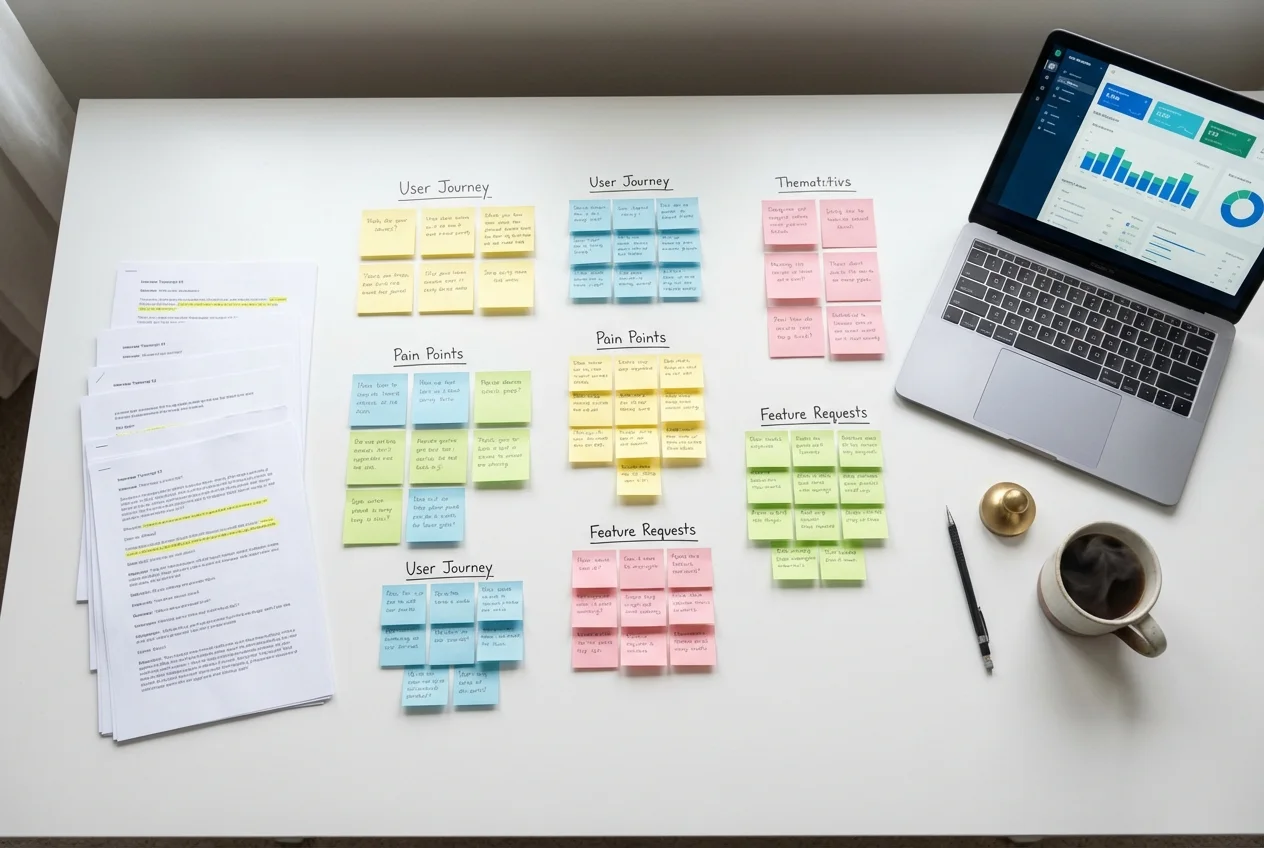
  3. Journey Mapping and Opportunity Scoring: The current user experience is mapped end-to-end across all primary and secondary journeys. Each touchpoint is assessed for friction severity and business impact, producing a scored opportunity matrix that identifies where UX investment will deliver the greatest measurable return.
  4. Roadmap and KPI Architecture: A prioritised UX roadmap is produced with a business case summary for each initiative, estimated effort, dependencies, and success metrics. KPIs are defined for each roadmap item and integrated into a measurement framework compatible with your existing OKR or balanced scorecard system.
  5. Governance and Adoption Planning: The strategy includes governance recommendations — decision rights, design review cadences, and escalation paths — designed to keep the roadmap alive and accountable beyond the initial engagement.

Deliverables for Leadership Consumption

Every artefact is designed to function within enterprise governance and planning systems — not as standalone documents that are reviewed once and filed.

  • UX maturity assessment with benchmark comparison and gap analysis
  • Validated user personas with behavioural profiles, jobs-to-be-done mapping, and revenue segment alignment
  • Current-state journey maps with friction scoring and opportunity prioritisation
  • Prioritised UX roadmap with business case summaries, effort estimates, and dependency mapping
  • KPI framework with metric definitions, measurement methodology, and quarterly review templates
  • Information architecture strategy with governance recommendations
  • Executive presentation deck summarising strategic direction, investment rationale, and expected outcomes

When Strategic UX Planning is Essential

Your organisation is planning a platform investment exceeding seven figures and needs a strategic framework to guide scope, sequencing, and success measurement. Multiple business units are commissioning design work independently, producing experiences that reflect organisational structure rather than user needs. Your design team is executing well tactically but lacks a strategic framework connecting their work to the business metrics leadership cares about. UX investment has not produced measurable improvements to conversion, retention, or customer satisfaction despite sustained spending — and leadership needs to understand why and what to change. You are integrating products or platforms following an acquisition and need a strategic vision that unifies the user experience across previously separate systems. In each of these situations, UX strategy is the prerequisite for effective, measurable design investment.

Why UX Agency London for Enterprise Strategy

Our strategic practice draws on twelve years of connecting UX investment to business performance across complex enterprise environments. We are fluent in the language of product directors, heads of digital, CFOs, and CTOs — and we design our outputs specifically for leadership consumption and governance integration. We do not produce strategy documents that are reviewed in a single meeting and then archived. We produce living frameworks: roadmaps that inform quarterly planning, KPIs that appear in executive dashboards, personas that shape product decisions at every organisational level, and governance models that keep the strategy accountable over time. Our clients include organisations in financial services, healthcare, professional services, and technology — sectors where strategic rigour is expected and evidential standards are high.

If your organisation needs a strategic foundation for its UX investment, book a free consultation to discuss how we can help.


Frequently Asked Questions

A focused programme — covering executive discovery workshops, persona development, journey mapping, and a prioritised UX roadmap with KPI framework — typically takes six to eight weeks from kickoff to final delivery. Organisations with a broader scope, multiple product lines, or more complex stakeholder governance should plan for eight to twelve weeks to allow for meaningful internal consultation, review, and alignment cycles.

Related Articles

More Services

UX ResearchUX AuditUI DesignPrototyping & WireframingFrontend DevelopmentFigma to Code

Let's build something great together — get in touch

Ready to Get Started with UX Strategy?

Start Your SaaS Journey
UX Strategy | UX Agency London