UX Audit Services London: How a Professional UX Audit Lifts B2B Conversion

What a Professional UX Audit Really Delivers
A UX audit is the single highest-leverage diagnostic a London B2B brand can run before committing to a redesign, a new feature programme, or a costly platform migration. Done properly by an experienced London UX agency, an audit answers the question that every product director and head of digital quietly carries into board meetings: where exactly is our product losing revenue, and what would it take to fix it? The output is not a slide deck of opinions — it is a prioritised, evidence-backed list of conversion blockers, with each finding tied to a specific business metric and a realistic implementation cost. That is the difference between a generalist "design review" and a professional UX audit service.
Most of the London teams who contact us about UX audit services have already tried the cheap alternatives. They have run a Hotjar trial, watched a few session recordings, asked a freelancer to take a look, or had an internal designer write up "10 things we should improve". None of those activities are bad, but none of them produce a defensible roadmap. A proper UX audit combines heuristic evaluation, analytics interrogation, session-replay analysis, accessibility testing, competitor benchmarking, and (where relevant) moderated user testing — then synthesises the findings into a single document that finance, product, and engineering can all act on.
What a London UX Audit Service Actually Covers
The scope of a credible UX audit varies by product complexity, but a London-based agency delivering enterprise-grade work will always cover six layers. Heuristic evaluation applies Nielsen's ten usability principles plus modern adaptations for B2B SaaS, e-commerce, and dashboard interfaces. Analytics review drills into GA4, Mixpanel, or Amplitude to identify where users drop out of high-value funnels. Session-replay analysis uses Hotjar, FullStory, or LogRocket to watch real users struggling with specific tasks. Accessibility audit tests against WCAG 2.2 AA — increasingly non-negotiable for UK public-sector contracts and increasingly relevant to private-sector procurement. Competitor benchmarking compares the product against three or four direct competitors on specific journey stages. Moderated testing, where budget allows, validates the most expensive findings with real users from the target segment.
The output is a single deliverable — usually a Notion or Figma document plus a 60-minute presentation — that ranks every finding by expected conversion impact, implementation cost, and confidence level. Findings that combine high impact, low cost, and high confidence are flagged as "quick wins" and typically deliver ROI within the first sprint after the audit completes.
How Much Does a UX Audit Cost in London?
Pricing for a professional UX audit in London ranges from £4,000 for a focused single-funnel review (typically 10 working days) to £25,000+ for a multi-product enterprise audit covering web, mobile, and admin surfaces (typically 4–6 weeks). The pricing variable that matters most is not the agency's day rate — it is the number of distinct user journeys being audited and the depth of analytics integration required. A SaaS dashboard with three core jobs-to-be-done can be audited rigorously in two weeks. A B2B marketplace with seller, buyer, and admin journeys plus deep CRM integration takes substantially longer. For a fuller breakdown by audit type, see our London UX pricing guide.
One pricing trap to avoid: agencies that quote a flat "UX audit package" without scoping the actual product first. A £1,500 fixed-price audit can only deliver heuristic opinions — there is no time in the budget for analytics work, session-replay analysis, or competitor benchmarking. That is fine if you want a second opinion on visual design, but it is not what produces a defensible roadmap.
The Audit Findings That Move the Most Revenue
Across the audits our London UX agency has delivered for B2B SaaS, financial services, and enterprise platforms, a small handful of finding-types account for the majority of post-audit revenue lift. Onboarding friction — particularly in the first three minutes of a new-user session — typically contributes 20–40% of activation losses and is almost always cheap to fix. Pricing-page clarity is the second most common revenue blocker, and the most under-invested: a single afternoon's work on pricing-page copy and visual hierarchy regularly delivers 10–20% lift on demo-request rates. Dashboard information architecture drives the bulk of expansion-revenue blockers in SaaS — users who cannot find the feature they need at the moment they need it do not upgrade. Form length and field validation on key conversion forms (sign-up, checkout, contact) is the most consistent quick-win across every audit we run.
For a deeper walkthrough of the specific patterns we look for, our UX audit checklist of the ten most common conversion-killers is the natural next read.
How a UX Audit Slots Into Wider Product Work
A UX audit is rarely a standalone purchase. In practice, London B2B teams use the audit in one of four ways. As pre-redesign scoping — to validate that the proposed redesign is solving the right problems before signing off a six-figure design programme. As quarterly health check — to keep an established product compounding gains as competitors move. As investor due-diligence preparation — to demonstrate that the product is in defensible shape before a funding round or acquisition conversation. As internal-alignment lever — to give product, engineering, and commercial teams a single neutral document to plan against. The audit's commercial value is amplified when it is sequenced into one of these wider initiatives rather than treated as an isolated exercise.
For most clients, the audit is followed by a focused UX strategy engagement to translate findings into a 12-month roadmap, then by targeted execution through UI design and frontend development against the highest-ROI items.
Choosing the Right Audit Partner in London
Three questions separate genuine UX audit specialists from agencies adding "audit" to their service menu. "Can we see two recent audit deliverables (anonymised)?" — established UX agencies have a clear, well-rehearsed format and will share examples; generalist studios will be vague or offer to walk you through "their approach". "How do you tie findings to revenue?" — a credible partner will describe how they model expected lift per finding using your funnel data, not just say "improved usability leads to better conversion". "Who actually does the audit?" — at a strong London UX agency, audits are led by senior practitioners with 8+ years of experience, because pattern recognition is the entire skill; if the audit is delegated to junior designers, the deliverable will read like a textbook rather than a diagnosis.
For wider context on selecting any UX partner in London, our best UX agency London buyer's guide covers the full evaluation framework.
Where to Go Next
If you are scoping UX audit services for a London B2B product, the most useful next step is a 30-minute working conversation about your specific funnel — not a sales call. Our senior UX practitioners will give you an honest read on whether your problem is audit-shaped, research-shaped, or strategy-shaped, and what a realistic engagement looks like for each.
Book your free 45-minute UX audit consultation with a senior London UX strategist, or explore the full UX audit service page to see how our London UX agency structures audit engagements end-to-end.
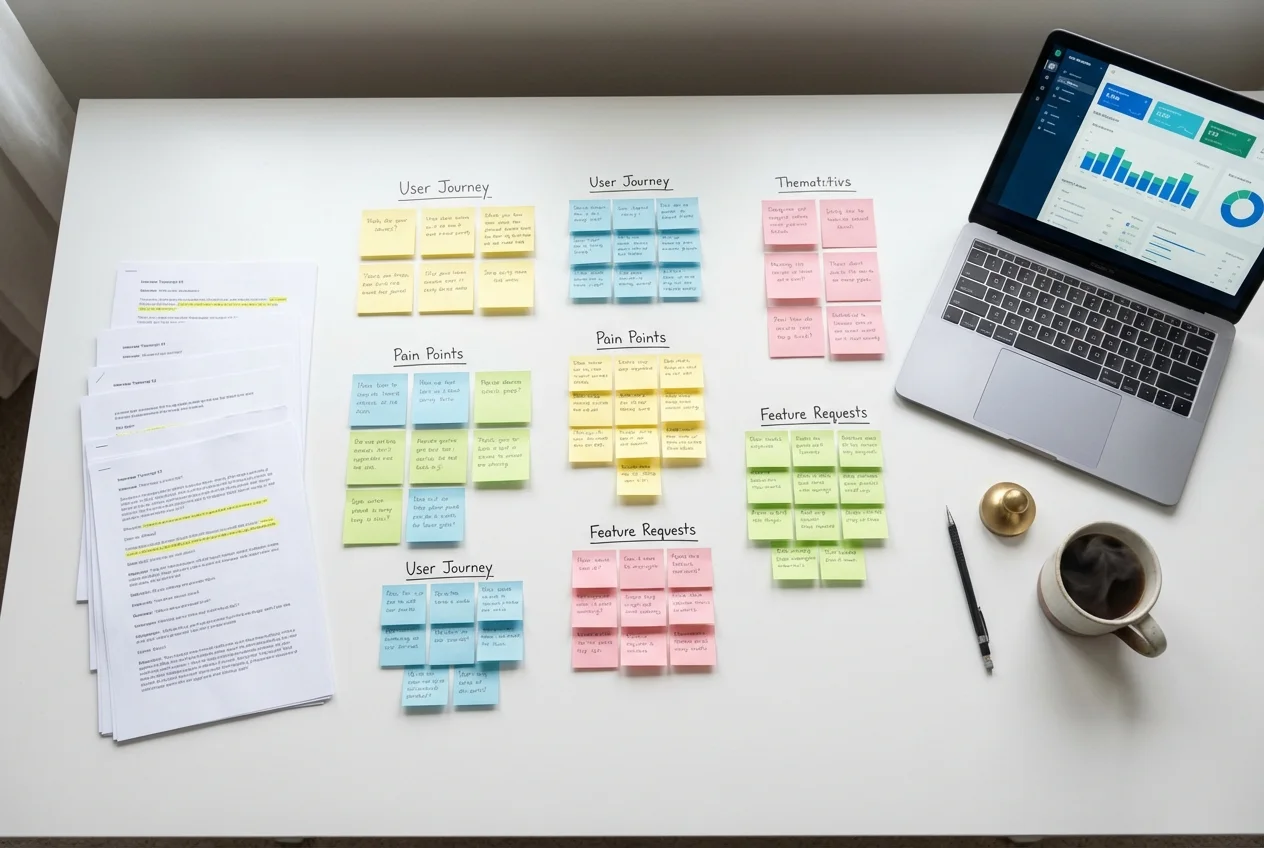 UX Research
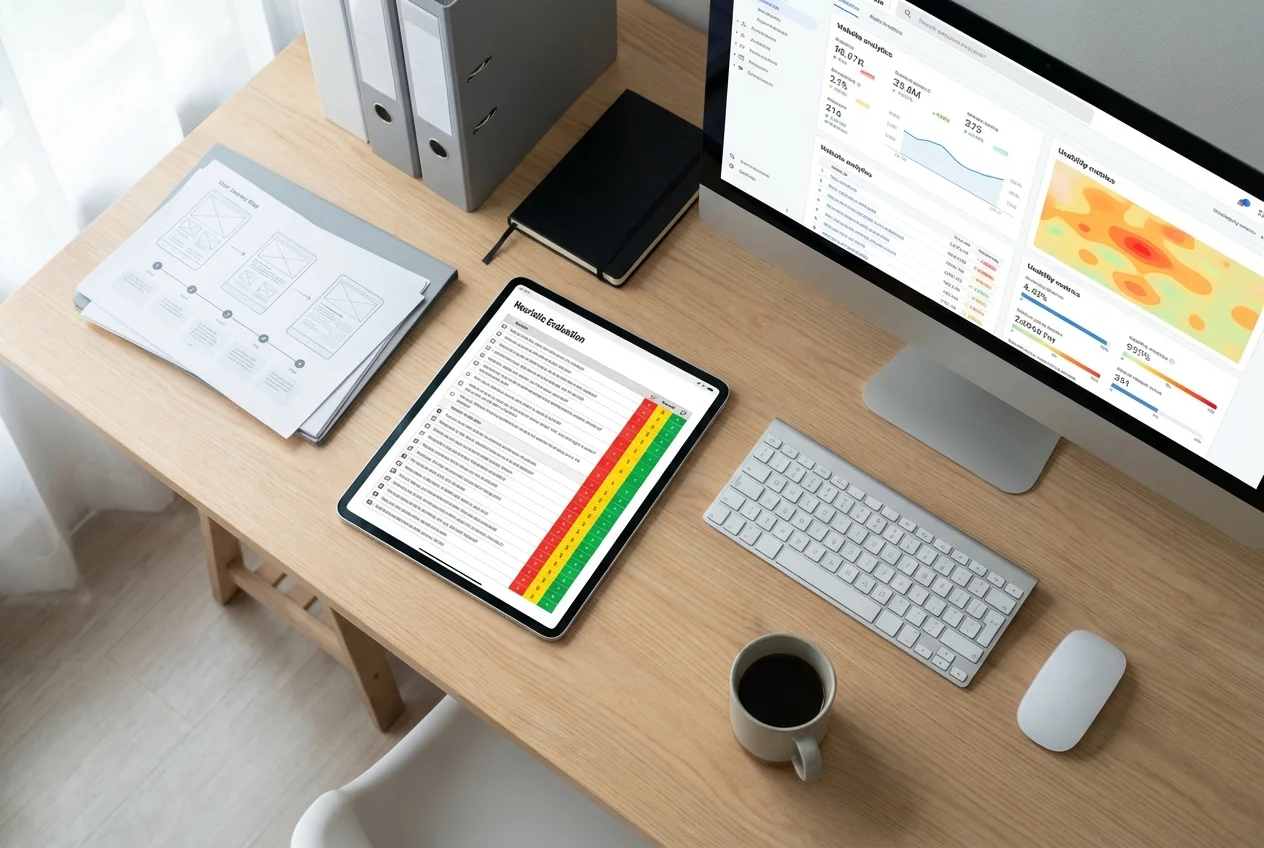 UX Audit
 UX Strategy