B2B SaaS Onboarding UX: How to Design Onboarding That Converts Trial Users
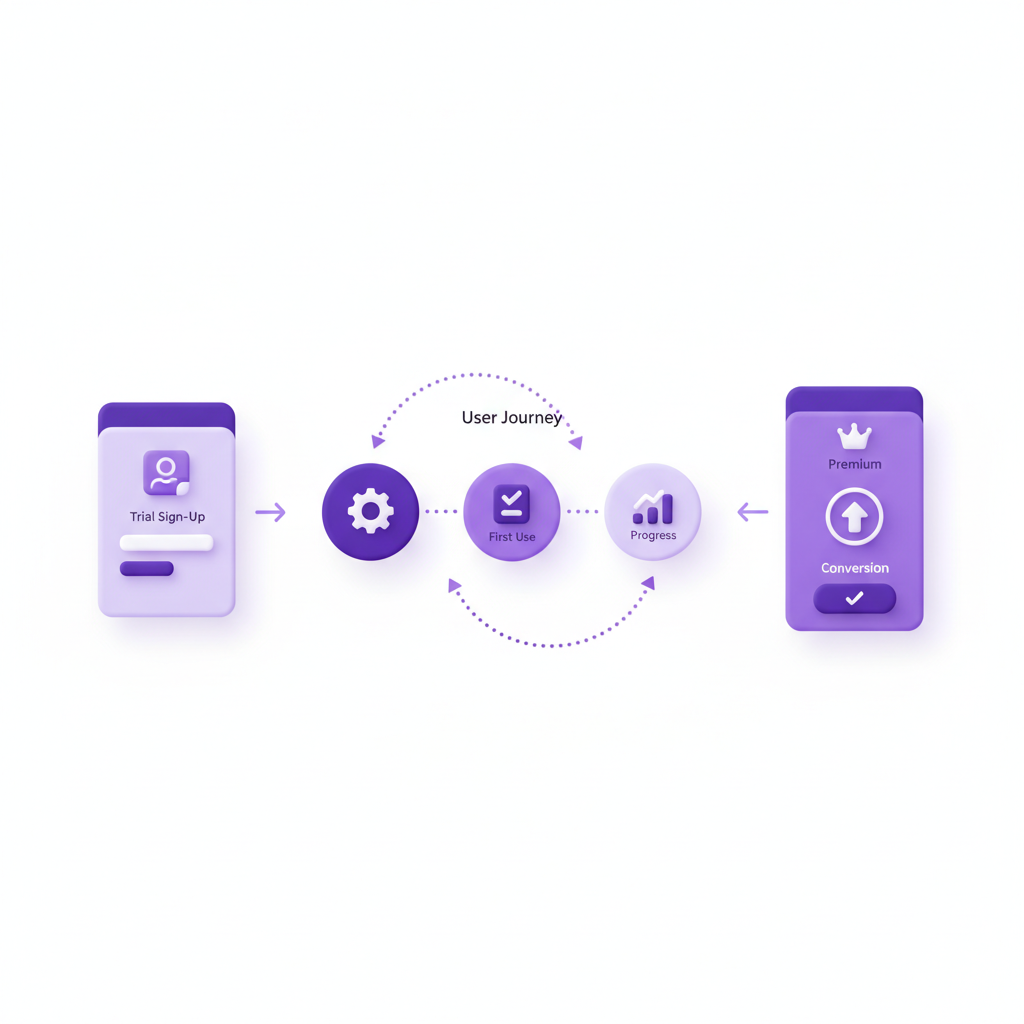
Why B2B SaaS Onboarding Is a UX Problem, Not a Product Tour Problem
Most B2B SaaS teams treat onboarding as a checklist of tooltips and a product tour bolted on after the core product ships. But onboarding is not a feature — it is the single highest-stakes UX surface in the entire product, because it is the only screen every trial user guarantees you will see. A weak core feature can survive if a user never finds it. A weak onboarding flow guarantees the user never gets far enough to find anything.
This guide is for product leaders and heads of growth at B2B SaaS companies who are seeing healthy trial signups but weak trial-to-paid conversion — and who suspect, correctly, that the gap is in the first-session experience rather than in the core product.
The Three Onboarding Failure Patterns We See Most in B2B SaaS Audits
Across dozens of B2B SaaS UX audits, the same three onboarding failures recur far more often than any product-specific issue:
- No defined "first value moment." The team has never explicitly agreed what a new user needs to experience — and how quickly — to understand the product's value. Without this, every onboarding decision is a guess, and the flow tends to show everything rather than the one thing that matters.
- Onboarding designed for the ideal customer, not the actual signup mix. Self-serve trial signups are rarely homogenous — a solo founder and an enterprise evaluator need different first sessions, but most flows funnel everyone through one generic path.
- Setup friction placed before value, not after. Integrations, data imports and team invites are frequently required before a user sees anything useful, guaranteeing drop-off from anyone not already convinced enough to push through unpaid setup work.
How to Define a First Value Moment
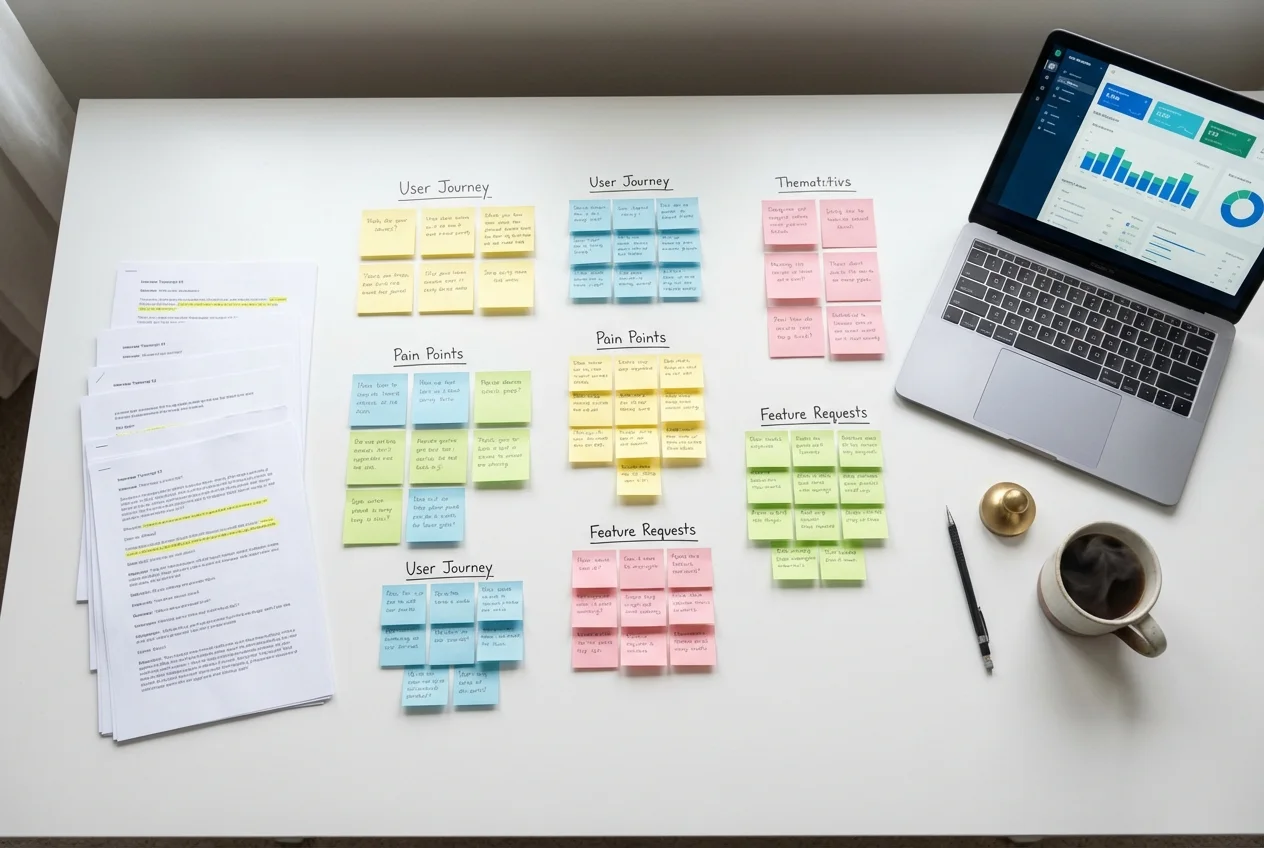
A first value moment is the smallest, fastest path from signup to a moment where the user experiences — not reads about — the product's core value. Defining it requires two inputs: usage data from your existing paid accounts showing which action best predicts long-term retention, and moderated UX research sessions watching new users attempt the product cold, without guidance. The gap between what the data says predicts retention and what real users can actually find unaided is almost always where onboarding needs to be redesigned.
Once defined, every onboarding screen should be evaluated against one question: does this get the user closer to the first value moment, or does it delay it? Account settings, team invites, and integration setup should be deferred until after that moment wherever the product architecture allows it.
Segmenting Onboarding by Signup Intent
Rather than a single generic flow, the strongest B2B SaaS onboarding experiences ask one or two lightweight qualifying questions at signup — role, company size, or primary use case — and branch the first session accordingly. A solo evaluator gets a fast, self-serve path to the first value moment. An enterprise buyer signing up ahead of a sales conversation gets a path that surfaces the specific capabilities their procurement process will scrutinise. This segmentation is a design and UX strategy exercise, not an engineering one — the underlying product does not need to change, only the sequence in which it is revealed.
Measuring Onboarding as a Funnel, Not a Single Metric
Treat onboarding as a multi-step funnel with a defined completion event at each stage, not a single "activated" flag. This surfaces exactly where users are dropping — at signup-to-first-login, first-login-to-first-value-moment, or first-value-moment-to-second-session — so redesign effort goes to the step actually losing the most users rather than wherever the team's intuition points. For teams that need this instrumented properly, our UX research team builds the measurement framework alongside the redesign so the impact of changes is visible within the first sprint.
Frequently Asked Questions
How long should B2B SaaS onboarding take before a user reaches real value?
For self-serve trials, the strongest benchmark is under five minutes from signup to the first value moment. Enterprise-oriented flows with a sales-assisted component can tolerate longer, provided the delay is spent on something the buyer perceives as valuable, such as a tailored demo path.
Should onboarding be different for self-serve trials versus sales-assisted signups?
Yes. A single generic flow forces a trade-off between overwhelming self-serve evaluators and under-informing enterprise buyers. A short qualifying question at signup lets the flow branch to the right depth for each segment.
What is the biggest onboarding mistake B2B SaaS teams make?
Requiring setup work — integrations, data imports, team invites — before the user has experienced any value. This filters out exactly the trial users who were not already committed enough to do unpaid setup work first.
If your trial signups are healthy but trial-to-paid conversion is not, book a free 45-minute consultation and we will review your current onboarding flow and identify where users are losing momentum before they reach real value.
 UX Research
 UX Audit
 UI Design