App UX Design Agency London | B2B Buyer's Guide 2026
Why App UX Design Is a Different Discipline From Website UX
An app ux design agency London teams hire for a mobile or web app engagement is solving a different problem than a marketing-site UX studio. Apps are used repeatedly by the same person, often daily, inside a session-based flow with persistent state — not browsed once and abandoned. That changes what "good UX" means: information hierarchy that works for a first-time visitor is the wrong design for a returning user who needs speed and muscle-memory over explanation. A b2b user experience agency that mainly ships marketing sites will default to persuasion-first patterns that actively slow down an app's power users.
For B2B products specifically, app UX carries an extra constraint that consumer apps rarely face: the person using the app and the person who bought it are usually different people, with different goals. The buyer wants ROI and adoption metrics; the daily user wants the fewest taps to get their job done. An app UX design agency worth hiring designs for both audiences explicitly, rather than assuming a good interface for one automatically satisfies the other.
What an App UX Design Agency Should Actually Deliver
Interaction and navigation model, not just screens
Static screen mockups are the easiest deliverable to produce and the least useful on their own. A proper app UX engagement defines the navigation model (tab bar vs. drawer vs. stack), the state transitions between screens, and the rules for what happens on error, empty, and loading states — the parts of an app that consume the most engineering time and cause the most usability complaints when left undefined. Our prototyping and wireframing service is built specifically to validate these interaction patterns before a single line of production code is written.
Design system components built for app-specific patterns
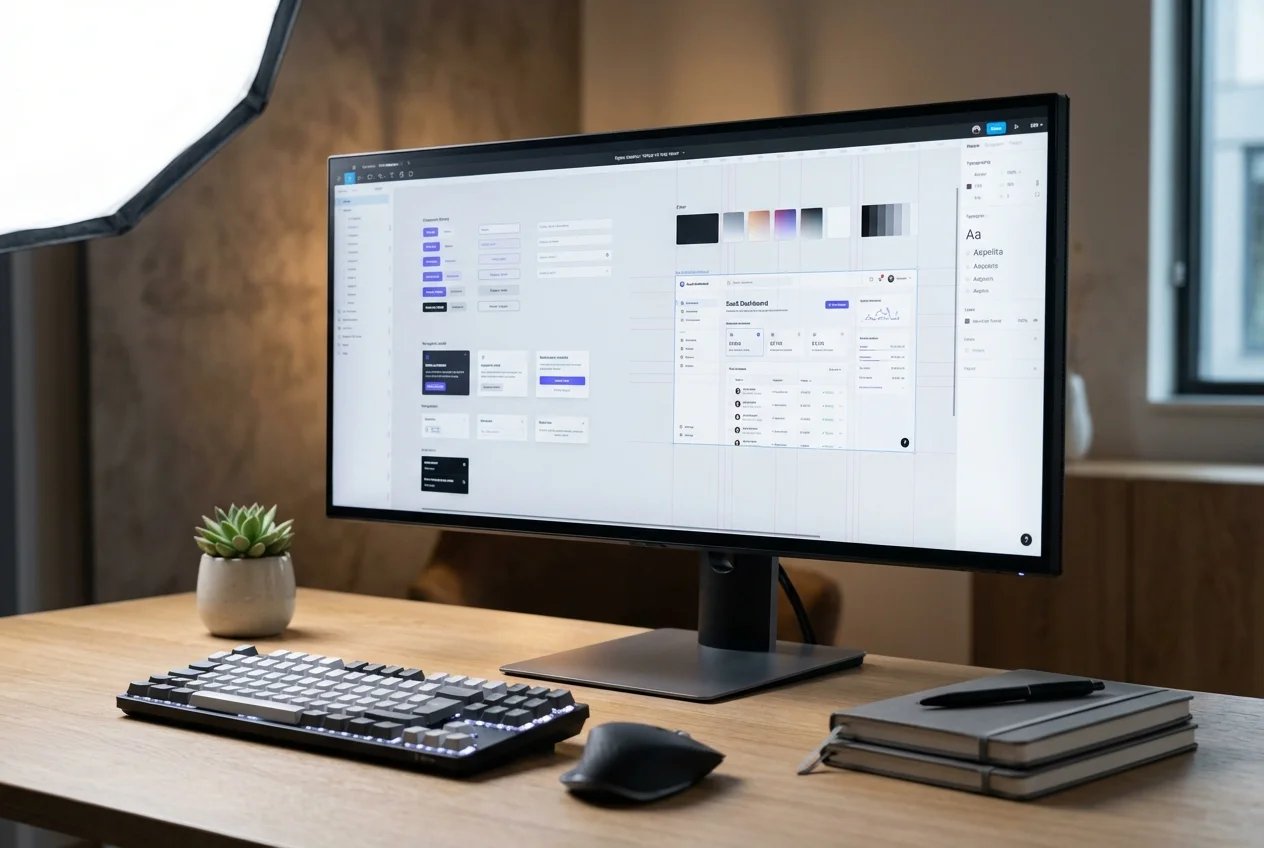
Web design systems and app design systems overlap less than most teams expect. Gestures, platform-specific navigation conventions (iOS vs. Android), offline states, and push-notification patterns all need their own component specifications. Our UI design service extends into these app-specific patterns rather than treating an app as a smaller version of a website.
Usability evidence from real task completion, not opinion
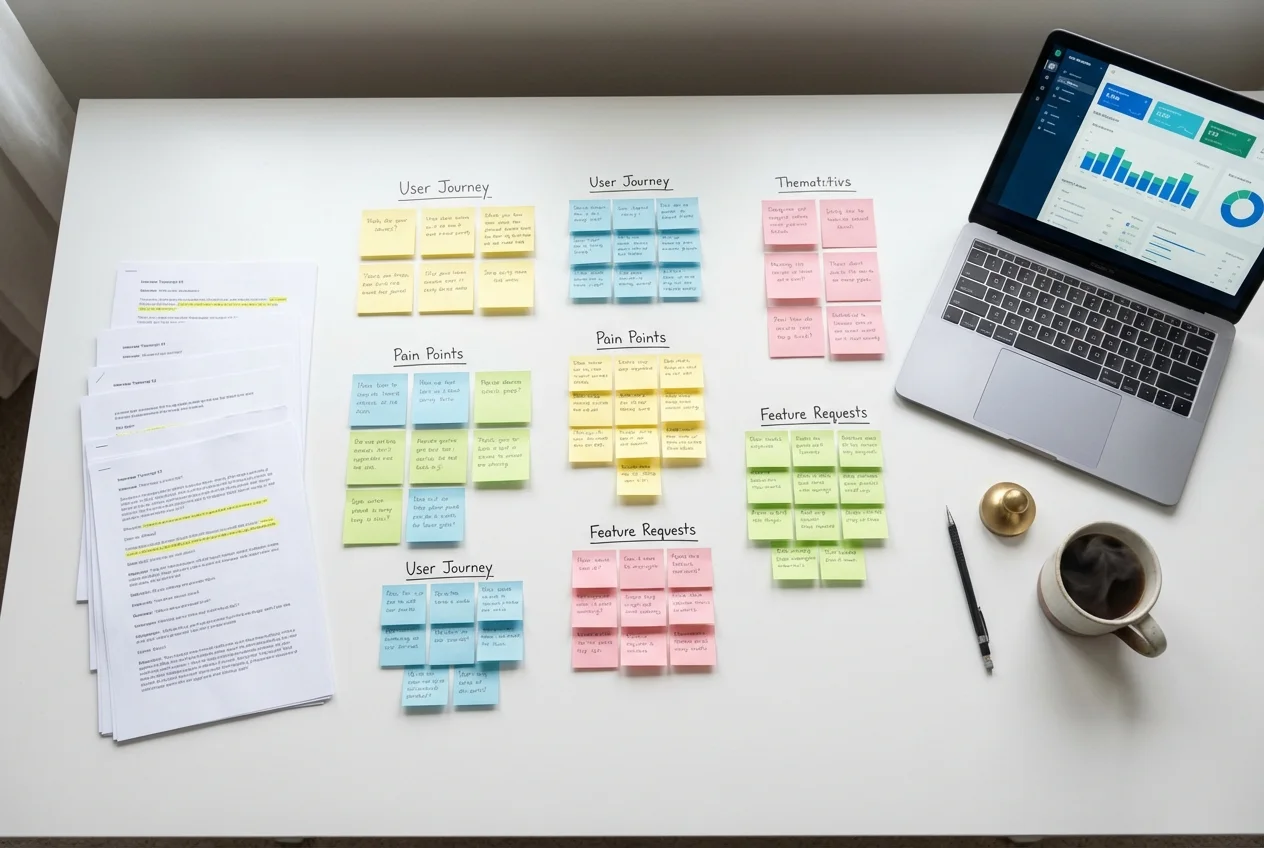
The most common failure mode in app UX design agency engagements is skipping validation and shipping straight from wireframe to build. For B2B apps in particular — where daily users will tolerate far less friction than a one-time website visitor — moderated usability testing on a working prototype catches problems that are expensive to fix after launch. Our UX research service runs this validation phase against a clickable prototype, not a static mockup, so the findings reflect how people actually interact with the flow.
App UX Design Agency vs. General UX Agency: What Actually Differs
Not every UX agency that lists "app design" in its services has genuinely built for the constraints unique to applications. Three questions separate a real app UX design agency from a generalist that occasionally ships an app:
- Can they show a navigation model for a multi-step workflow, not just a home screen? Home screens are the easiest part of app design. Ask to see how they handled a five-step process with error recovery and partial completion.
- Do they design for offline and degraded-connectivity states? B2B field and warehouse apps in particular need explicit design for intermittent connectivity — a generalist agency rarely accounts for this unprompted.
- Have they worked with your engineering stack's actual constraints? A design that ignores React Native's component limitations, or a PWA's platform restrictions, creates rework during the handoff to frontend development.
How Much Does App UX Design Cost in London?
For a defined B2B app with 15-30 core screens, a full app UX engagement — research, interaction design, UI design system, and validated prototype — typically runs £15,000-£45,000 in London, depending on the number of user roles and workflow complexity. Simpler internal tools with a single user role and linear workflows sit at the lower end; multi-role platforms with permission-based views and complex state management sit at the higher end. See our broader UX services pricing guide for how app work compares to website-only engagements, or our SaaS UX design agency guide if your app is a multi-tenant B2B SaaS product specifically.
Frequently Asked Questions
What's the difference between an app UX design agency and a mobile development agency?
An app UX design agency defines what the app should look like and how it should behave — research, interaction design, UI components, validated prototypes. A mobile development agency builds and ships the code. Many B2B teams use a specialist for each phase, with a structured handoff between them.
Do B2B apps really need dedicated UX design, or can engineering teams design it themselves?
Engineering teams can absolutely design functional apps, but functional and usable are not the same thing. Without structured usability validation, teams tend to design for how the system works internally rather than how a first-time or occasional user actually thinks about the task — which is exactly the gap dedicated app UX design closes.
How long does an app UX design engagement take?
For a mid-complexity B2B app, expect four to eight weeks from initial research through a validated, development-ready prototype — shorter for single-workflow internal tools, longer for multi-role platforms with complex permissions.
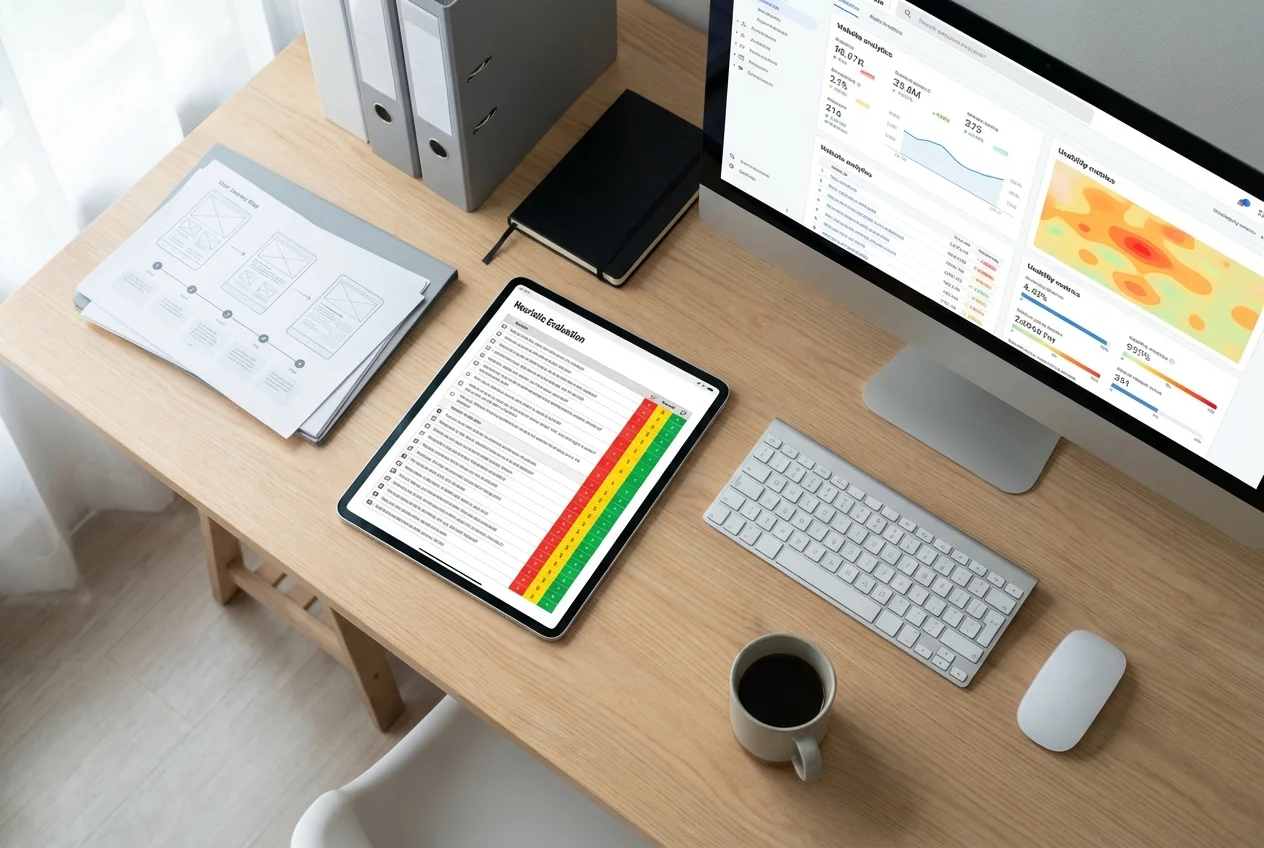
Looking for an app UX design agency for a specific B2B product? Book a free product review and we'll assess your app's current flows and tell you honestly where the usability risk actually sits.
 UX Research
 UX Audit
 UI Design